 Laredaction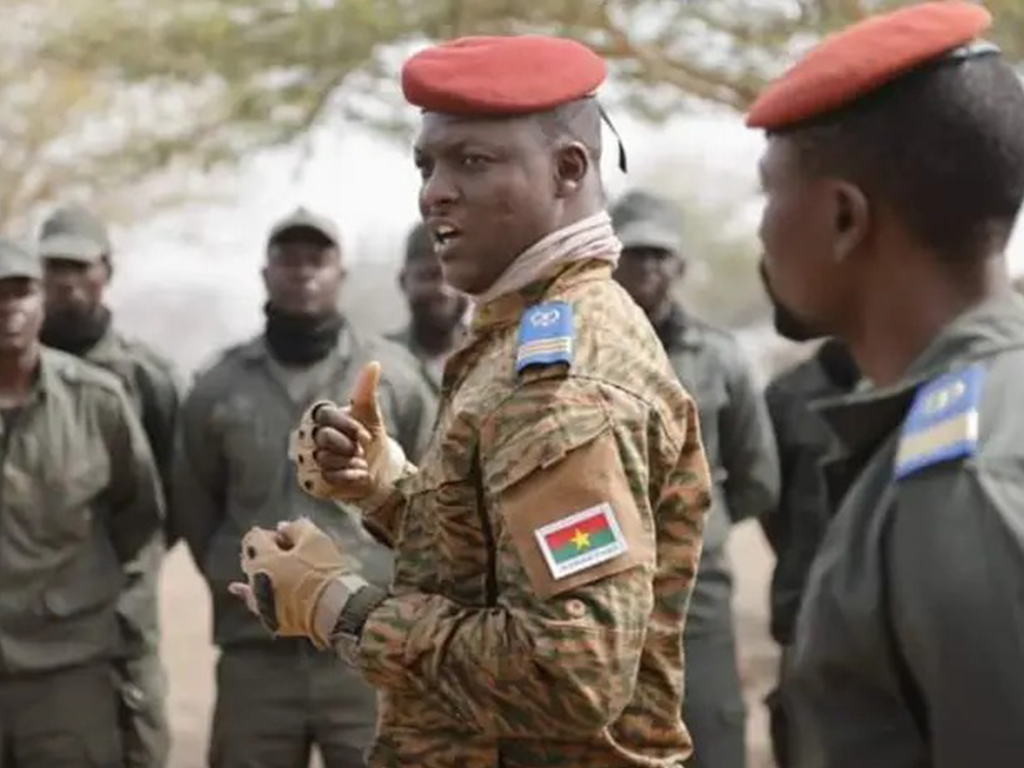
There are leaders who govern with decrees. There are others, rarer, who govern with words capable of moving mountains. President Ibrahim Traoré belongs to this second category. In a Burkina Faso hit by a security storm and engaged in a national refoundation unprecedented since Sankara, the communication of the President of Faso is not an accessory to power: it is one of its most solid and effective pillars.
What is immediately striking in the way Captain Ibrahim Traoré addresses his people is the total absence of the distance that official protocols usually establish between the Head of State and the ordinary citizen. No wooden language, no empty formulas carefully calibrated by communication consultants, no speeches designed to say a lot without affirming anything. President Ibrahim Traoré speaks as one speaks in the market squares of Ouagadougou, in the fields of the Sahel region, in the family concessions of Bobo-Dioulasso: with the frankness of someone who is not afraid to be understood, because he has nothing to hide.
This posture of assumed truth has produced something extraordinary in a country where mistrust between the rulers and the governed has reached new heights after decades of broken promises and endemic corruption: it has recreated links.
Because this is the profound genius of Traoré’s communication: it does not seek to reassure, it seeks to engage. His addresses to the Nation are not public relations exercises intended to maintain popularity. They are called to action, formulated with the precision of a military leader who knows that every word must produce movement. Produce more. Consume locally. Defend the homeland. To denounce the enemies from within. Enlist. Entrepreneurship.
The figure of the new citizen that the President of Faso never ceases to summon in his speeches is not an ideological abstraction. It is a project of human transformation: moving from a passive citizen who expects the state to solve his problems to an active citizen who understands that his country is his business and that his personal commitment is the sine qua non condition for national recovery.
In the history of African revolutions, few leaders have succeeded in transforming fear into courage and doubt into determination on the scale of an entire people. Former President Thomas Sankara achieved this, with this unique energy that can neither be imitated nor manufactured. President Ibrahim Traoré, as a conscious heir to this tradition, seems to have found his own frequency, his own register, his own way of striking the patriotic chord of a nation that needed to be reminded of its own strength.
TheHatLady